New Construction vs. Resale in Katy: How to Compare Rates and Property Taxes
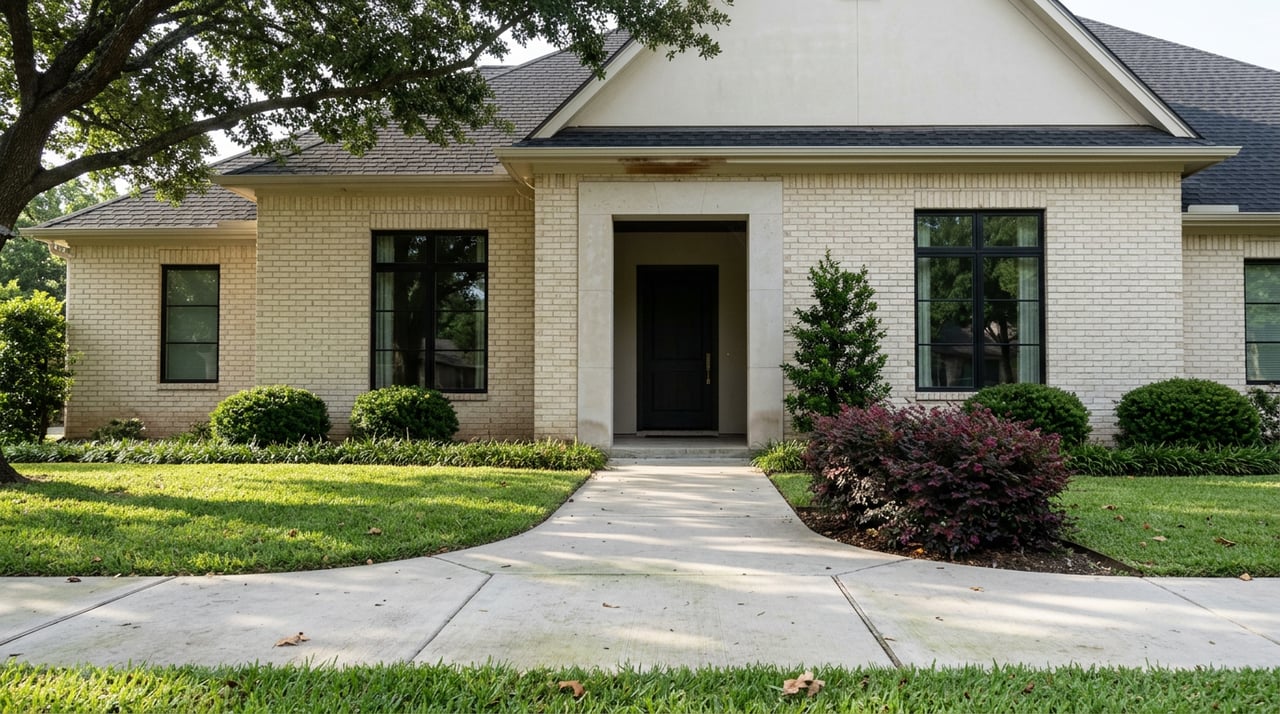
Here's how it usually goes. A buyer tours a resale home in an established Katy neighborhood on Saturday morning, then drives fifteen minutes to a model home in one of the newer master-planned communities that afternoon. The resale needs a coat of paint and the landscaping has some age on it. The new build has a builder's rep waiting with a rate that beats anything the buyer's own lender quoted them. The decision looks easy.
Then the tax bill lands somewhere the buyer didn't budget for. If they missed a filing deadline that had nothing to do with the mortgage, the surprise gets worse. What looked like the better deal at closing turns out to have simply deferred part of its real cost.
This is not a story about builders behaving badly. It's a story about where the savings actually live. In Katy's 2026 market, the incentive that makes a new build look cheaper than a comparable resale almost never shows up as a lower price. It shows up as a lower payment, for a while, funded through a structure that has its own expiration date and its own tax consequences. Comparing the two homes by rate alone misses the part of the math that determines what you're actually paying by year three.
Most builder incentives across the Katy and Fulshear corridor right now come in one of two forms: a temporary rate buydown or a permanent one. A permanent buydown costs the builder roughly one percent of the loan amount for every quarter-point of rate reduction, paid upfront through discount points.
The dollar value of these packages typically runs $8,000 to $25,000 depending on the community and price point, and some builders layer in design center credits on top. On a $332,500 loan, a 2-1 buydown works out to roughly $7,500 in total payment relief, or about $300 to $500 a month on a $350,000 home. That's real money. It's also money with a countdown attached.
Active Katy listings this August average close to $461,000, around $173 a square foot, and the median home is sitting on the market for about 68 days before going under contract. With more homes to compare, buyers may focus on whether the monthly number works today; a subsidized rate can help without changing the sticker price.
Here's an important part of the comparison. Builders in active communities are managing an inventory of homes that will keep closing for months or years after your contract. If a builder cuts the list price on your unit to make a sale, that lower number can become a comp for later appraisals in the community. A rate buydown doesn't touch the recorded sale price. The contract still reads full value.
Buyers cross-shopping communities like Sunterra, Elyson, Cane Island, Jordan Ranch, Firethorne, Seven Meadows, Cross Creek Ranch, Grand Lakes, Harvest Green, Cinco Ranch, and Tamarron may encounter incentives from builders including Perry Homes, Chesmar Homes, Taylor Morrison, Pulte, David Weekley, Highland Homes, and DR Horton. Incentive language varies by builder.
Some incentive structures also have a side effect worth sitting with. Some builders offset the cost of the buydown by building it into the base price in the first place, adding roughly two to four percent before the incentive is ever applied. The buyer isn't necessarily getting a $10,000 gift. In some cases they're getting $10,000 of relief on a price that was already marked up to fund it.
New master-planned communities in the Katy and Fulshear corridor are almost always financed in part through a Municipal Utility District or a Public Improvement District, which pays for the roads, water, and drainage infrastructure before a single house goes up. That financing shows up as part of the property tax rate, and it typically runs between 3.0 and 3.5 percent across communities in this corridor. Cross Creek West publishes its current combined rate at 3.16 percent, which sits squarely in that range and gives a useful anchor for what a MUD-financed rate actually looks like in practice.
Established Katy neighborhoods built before this wave of master-planned development, including areas along the I-10 corridor such as Memorial Parkway, Parkway Villages, and Pine Forest, generally don't carry that same layer of infrastructure debt in their tax rate, because the utility districts serving those areas were either never structured this way or have already retired their bonds. That difference comes from the taxing authority, not the builder. Property taxes remain part of the comparison long after the 2-1 buydown has expired.
Texas gives buyers a real offset here through a homestead exemption, but there is a filing deadline, so the timing matters.
Put those mechanisms side by side and the pattern is clear. A buydown can provide savings for a while, while property taxes remain part of the comparison and homestead paperwork still matters.
A resale listing and a new construction listing with the same advertised monthly payment are not the same offer. To compare them honestly, you need three numbers side by side: the note rate you'll actually pay once any temporary buydown expires, the full property tax rate including any MUD or PID layer, and whether the homestead exemption timeline lines up with your closing date. A resale home in an established Katy neighborhood might carry a higher mortgage rate today but a lower property tax rate. A new build might win on rate for a while, while property taxes continue to affect the total cost.
None of this means new construction is a bad choice in Katy. Builders are offering genuine value in a market where homes are taking longer to sell and buyers have more room to negotiate. It means the comparison has to run past the model home and into the tax rate sheet, because that's where the real cost of ownership actually lives.
A quick side-by-side, using figures from current builder and tax data in the corridor:
| During The Buydown | After The Buydown Period | |
|---|---|---|
| New build with a 2-1 buydown | Payment relief of roughly $300 to $500 a month | The full note rate applies after the buydown period; MUD/PID tax rate of 3.0-3.5% continues regardless |
| Resale in an established neighborhood | No buydown, but often a lower, non-MUD tax rate | Payment stays consistent; property taxes remain part of the comparison |
Does every new construction community in the Katy-Fulshear corridor carry a MUD tax? Not universally, but it's common in communities built on land developed specifically for this wave of master-planned growth. The rate isn't permanent forever either. It typically declines over time as the district pays down its bonds, though that can take years.
What happens when the builder's rate buydown ends? With a 2-1 structure, the rate eventually returns to the full note rate. It's worth running the payment number after the buydown ends before you fall in love with the initial number.
What should resale buyers know about the homestead filing? The filing timeline is worth checking for either purchase.
If you're weighing a resale home against a new build anywhere in the Katy or Fulshear corridor, the honest comparison takes about twenty minutes with the actual numbers in front of you, not the ones on the sign. SKW Realty works this math with buyers and move-up sellers across Katy every week, and if you're selling your current home to make the move, we'll start with a free home valuation so you know what you're working with before you compare a single rate sheet.
This article is general information, not legal, tax or financial advice. Consult a qualified professional about your situation.
Stay up to date on the latest real estate trends.