Pricing your Fulshear home wrong can cost you time and money. With rapid growth, active builders, and distinct master-planned communities, a small pricing miss can mean weeks on the market or leaving cash on the table. You want a clear, data-first plan that explains exactly where your value sits and how to launch for the best outcome. In this post, you’ll see how we price Fulshear homes using local comps, absorption trends, and precise adjustments for lots, amenities, and new construction competition. Let’s dive in.
Why local comps matter in Fulshear
Fulshear’s market is unique. You have new construction competing with resale, plus major master-planned communities and custom pockets that vary by builder, section, and amenities. Gated sections, water or golf lots, and outdoor living packages can shift value in meaningful ways.
That is why we only use granular, neighborhood-level comps. We focus on the same subdivision or an immediately adjacent section with similar product and lot type. Broader city or county averages risk mispricing your home because they blur the differences that buyers in Fulshear notice.
Our CMA process for Fulshear
Our comparative market analysis is built from neighborhood data, MLS history, Fort Bend County records, and builder resources. Here is how we assemble your value picture.
1) Define your micro-market and comps
We prioritize comps in this order:
- Same subdivision or section when possible, especially if it is a gated pocket or unique builder release.
- Within 0.25 to 0.5 miles if a similar product and lot type exists nearby.
- Similar lot size and type, such as interior, cul-de-sac, corner, water, or golf.
- Similar age band. For modern luxury we aim for plus or minus 5 years, widening to 10 if needed.
- Similar floor plan, bed and bath count, and above-grade living area.
- Adjust for finish level, renovations, and accessory structures like a casita or oversized garage.
2) Measure absorption and months of inventory
Absorption shows how fast homes like yours are selling. We calculate monthly absorption as recent closed sales divided by active listings. Months of inventory is the inverse: active listings divided by average monthly sales. Lower months of inventory supports stronger pricing and faster timing.
- Seller’s market: roughly under 3 months of inventory.
- Balanced: 3 to 6 months.
- Buyer’s market: over 6 months.
Example: If a gated section shows 12 active listings and averages 4 sales per month, months of inventory is 12 ÷ 4 = 3. That suggests balanced to slightly tight conditions, which supports pricing near fair market value for a well-presented home.
3) Analyze list-to-sale ratios
List-to-sale ratio (LSR) is final sale price divided by the last list price, expressed as a percentage. We calculate LSR for your subdivision over the prior 6 to 12 months and use the median to minimize outliers.
- Move-up segments often sell closer to list when priced inside the recent comp band.
- Luxury homes can see wider negotiation ranges if active competition is similar and visible.
Example: If recent resales in your section show a median LSR of 98.5 percent, a home listed at 1,000,000 would be expected to close near 985,000 assuming typical market terms and presentation.
4) Track DOM and time to contract
Days on Market (DOM) and Days to Pending help calibrate expectations and post-launch decisions. For niche luxury, Days to Pending is especially useful because contract acceptance is the milestone that reflects price-market fit.
We compare your DOM to the subdivision median. If your listing exceeds the median by 30 to 50 percent and showing traffic is weak, we reassess pricing and presentation rather than waiting passively.
5) Use price per square foot the right way
Price per square foot is directional, not definitive. In Fulshear it varies with lot size, finish level, and outdoor living. We only compare ppsf for like-for-like product and then overlay line-item adjustments for major differences.
- Two homes can share a similar ppsf but diverge in value because one backs to water and the other does not.
- Recent renovations, appliance packages, and millwork can justify meaningful premiums.
Adjustments that move the needle
Raw comps rarely match perfectly. We quantify the pieces that buyers in Fulshear pay for: lot position, outdoor amenities, and the new construction factor.
Lot premiums
Lot characteristics such as cul-de-sac position, water frontage, golf views, or usable yard area carry real premiums. We measure them by comparing closed sales within the same section whenever possible. If closed comps are limited, we reference local builder lot maps and historical price differentials to estimate a dollar premium.
Illustrative example: Three similar resales in the same section closed at 850,000 on a standard lot, 900,000 on a golf-view lot, and 930,000 on a golf-view lot with a pool. That suggests a golf premium in this section in the tens of thousands, with the pool as an additional contributor. We validate with more paired sales before finalizing the adjustment.
Amenities and interior upgrades
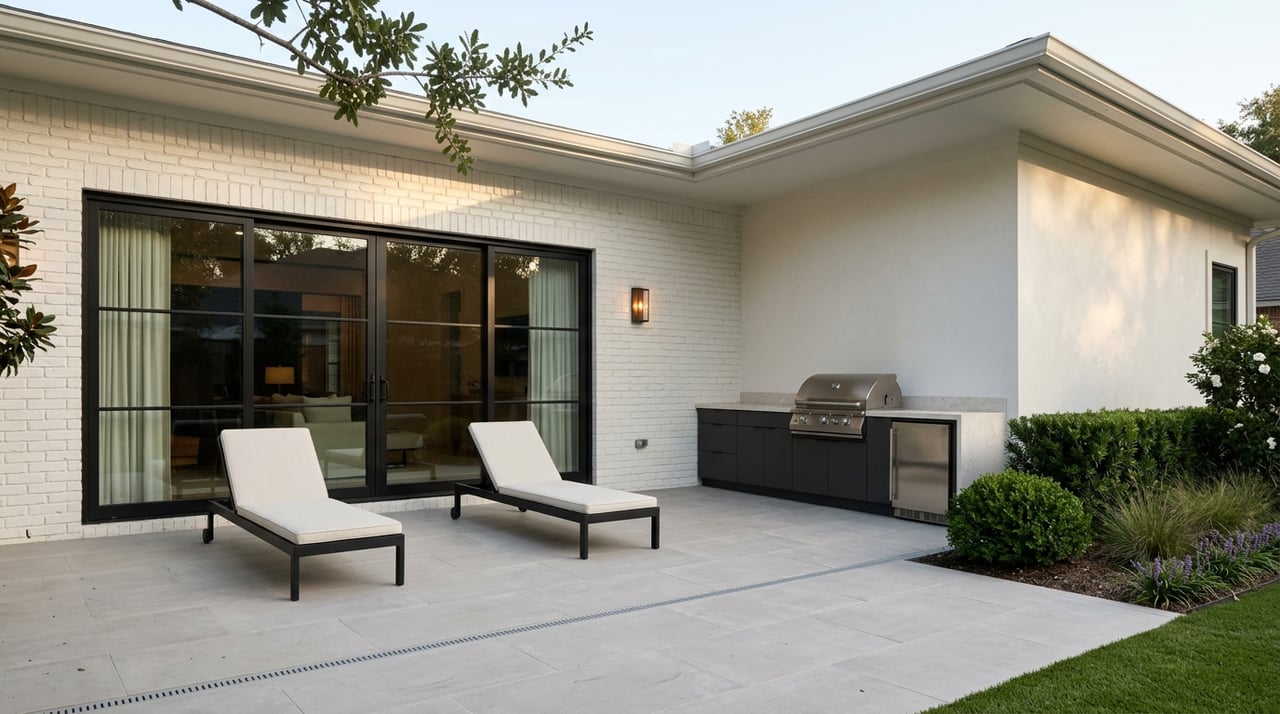
Pools, spas, covered patios, outdoor kitchens, and landscaping matter in our climate. In the upper-mid to luxury range, outdoor living packages often help a listing meet buyer expectations. Inside, a true gourmet kitchen, high-end appliances, flooring upgrades, and custom millwork can lift perceived value.
We derive contributory value from neighborhood sales where those features were present versus absent. We prefer dollar adjustments specific to your section instead of broad percentage rules.
New construction versus resale
Builders in Fulshear often market aggressively and may offer rate buydowns or closing cost help. That impacts the effective price of new builds and, by extension, how buyers compare them to resales.
- We document builder incentives on closed sales and adjust those comp prices upward when benchmarking your resale.
- We account for warranties and newness, then weigh any resale advantages, such as upgraded window treatments, custom closets, or mature landscaping.
- At least one closed new construction comp is included when relevant to show where the market clears today.
Turning data into a pricing strategy
We start with a pricing band based on local comps, absorption, LSR, and line-item adjustments. Then we model strategy options so you can choose the approach that fits your goals and timing.
- Market-value pricing: Align near fair market value to attract early, strong offers when inventory is moderate and you want predictable timing.
- Aspirational pricing: Test above the comp band when inventory is very tight and your home is rare. Expect potentially longer DOM and plan for a longer runway.
- Penetration pricing: List slightly under the comp band to create urgency and encourage multiple offers. Works well for broadly appealing homes with best-in-class presentation.
Launch timing that supports your goals
Buyer activity in the Houston metro typically builds in spring, with another lift in early fall. Fulshear follows similar patterns, while luxury buyers tend to search year-round.
- For most sellers, late winter to early spring is ideal.
- For showpiece properties, we schedule exteriors when landscaping is at its best and add a broker preview to activate agent networks.
- If competition is low in winter and your timing is firm, a winter launch can still succeed with targeted marketing.
Marketing that elevates your result
In a market where new builds compete for attention, premium presentation makes a difference.
Core materials:
- Professional photography with day and twilight sets, detailed floor plans, and cinematic video. Drone is used where permitted.
- A dedicated property page and stand-out MLS remarks that highlight lot position, upgrades, and section-specific features.
- Targeted digital campaigns with local geofencing and lifestyle targeting, plus relocation outreach for out-of-town buyers.
Premium exposure for luxury:
- Placement on top-tier luxury portals and curated social campaigns.
- Broker tours and private events, supported by high-quality print collateral.
- Concierge-level showings by appointment for qualified buyers.
Staging and curb appeal:
- Partial or full staging often shortens time to contract by clarifying scale and flow.
- Refresh landscaping, power wash hardscapes, and enhance outdoor lighting. Outdoor living is a Fulshear strength, so we showcase it.
After launch: read the market and adjust
We monitor showings, online saves, and agent feedback against neighborhood benchmarks. If traffic trails expectations or offers cluster well below list, we diagnose first, then adjust.
- Verify that marketing is fully deployed and photos, copy, and syndication are on point.
- If exposure is robust and the gap persists, we recommend a measured step-down price adjustment based on a sensitivity analysis of absorption and LSR.
- We time adjustments to recapture “freshness” and keep you ahead of competing listings.
What you receive in our CMA packet
You will get a clear, decision-ready package that shows the math and the why.
- Executive summary with a recommended list price band, strategy choice, and expected DOM.
- Neighborhood comp sheet with 6 to 12 closed, pending, and active comps, each annotated for lot, amenities, upgrades, and incentives.
- Adjustment schedule showing dollar adjustments and the rationale for each.
- Market metrics for your section: absorption, months of inventory, median LSR, average DOM, and any notable shifts in supply or rates.
- Sensitivity scenarios with best case, expected, and conservative outcomes, plus estimated net-to-seller.
- A marketing plan with timelines for media, launch, broker activities, and premium placements.
- Disclosures on builder incentives, HOA factors, special assessments, and recent permits that may affect value.
A quick pricing walk-through
Here is a simplified example for a move-up home in a master-planned section:
- Baseline comps: Three similar resales on standard interior lots closed at 785,000, 795,000, and 800,000. The median is 795,000.
- Absorption: 10 actives, 5 sales per month. Months of inventory is 10 ÷ 5 = 2, a tight segment that supports pricing near market value.
- LSR median: 99 percent over the last 6 months, suggesting buyers paid close to list when homes were priced correctly.
- Subject property: Cul-de-sac lot with a covered patio and outdoor kitchen, plus a recently updated kitchen.
- Adjustments: Cul-de-sac premium from paired sales in the section indicates a 10,000 to 15,000 lift. Outdoor kitchen and covered patio contribute a combined 15,000 to 25,000 based on similar sales. Kitchen updates align with a 10,000 to 20,000 premium in this section.
Putting it together: Start with the 795,000 median, then add a conservative 35,000 to 45,000 for the combined features. The supported range becomes roughly 830,000 to 840,000. With 2 months of inventory and a 99 percent LSR median, a market-value list at 839,000 could target full-price or near-full-price outcomes with a timely contract if presentation is excellent.
Ready to price with precision?
If you are planning to sell in Fulshear, you deserve a pricing plan that accounts for your exact section, lot, and upgrades, and a launch that outperforms active builders. Let us build your CMA, show you the scenarios, and help you choose the best path to your ideal outcome. Contact Serene Wong to get started.
FAQs
How do you choose comps when sales are sparse?
- We widen the time window, include pending sales, and use at least one closed new construction comp adjusted for incentives and finish differences to anchor value.
How much do pools and outdoor kitchens add in Fulshear?
- Contributory value varies by subdivision, but we measure it locally using paired sales and present a dollar estimate with a confidence range in your adjustment schedule.
Should I price high and plan to negotiate, or price to market?
- We model both options; pricing to market offers more predictable timing, while aspirational pricing is best reserved for rare homes when you can wait longer.
How do builder incentives affect my resale price?
- We document incentives on builder sales and adjust those comp prices upward to reflect their effective market price before comparing them to your home.
When should I consider a price reduction if I have no offers?
- If showings lag neighborhood benchmarks in the first 10 to 14 days or DOM exceeds the local median by 30 to 50 percent, we reassess and recommend a measured adjustment.